Privacy by Design: What it Means for Your Website
In the world of digital, data is often talked about like a commodity. But at Rock, we see it differently. Data isn't just a set of strings in a database; it’s a direct reflection of your customers.
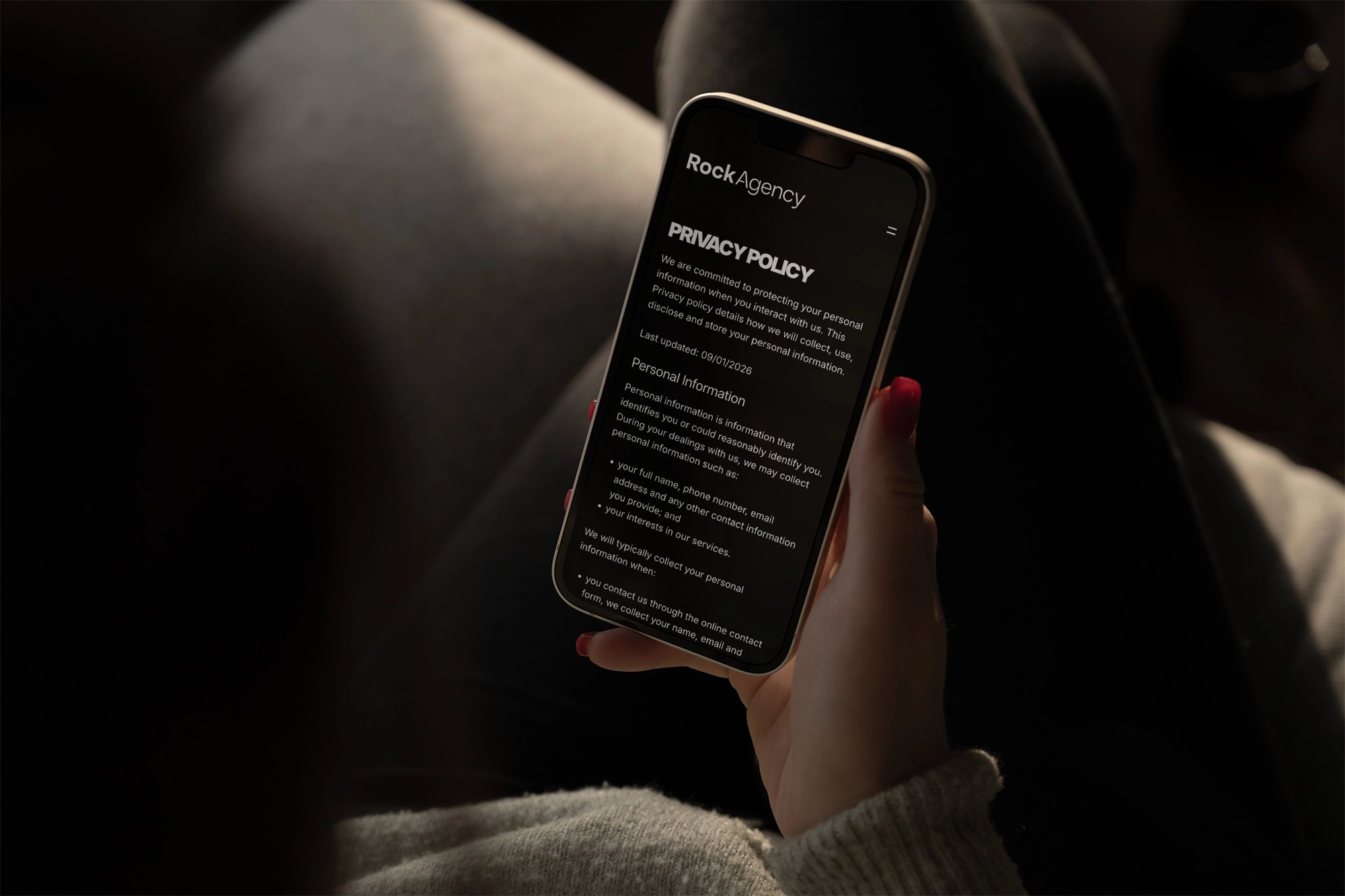
With the Australian privacy landscape shifting and the OAIC (Office of the Australian Information Commissioner) turning up the heat on transparency, “winging it” with your data collection is no longer an option. Whether you’re a local startup or a complex enterprise, treating personal information with respect isn’t just a legal checkbox, it’s a cornerstone of a human-first brand.
The Human Side of the Data
It’s easy to get lost in the tech, but every email address or phone number belongs to a real person. You never truly know what a customer is going through, whether they are navigating a health crisis, a financial hurdle, or a major life change.
When you collect data, you are being entrusted with a piece of someone’s story. Handling that data with high-level security is a baseline requirement, but handling it with empathy is what builds real, long-term loyalty.
Ask yourself: if I handled my family’s information like this, would they be okay with it? Would I? If the answer is anything other than yes, it’s a good time for a look at what is going on.
Transparency Over Everything
The core of Australian privacy rules is simple: No surprises. Transparency is the new currency of the digital age. It’s all about telling people exactly how you intend to use their data before they give it to you.
Whether you’re using data for internal user experience (UX) improvements or sharing it with a third-party marketing tool, be clear. You don’t need a 50-page legal manifesto; you just need honest, plain-English communication that keeps the user in the driver’s seat.
Transparency is relatively simple to achieve too. First, understand what data you are collecting and how. Second, map how you use that data in your business and who you give it to such as suppliers. Third, have a privacy policy and collection notices that explain to your customers what is happening.
Terms & Conditions: Your Digital Shield
Many businesses treat their Terms & Conditions like a “copy-paste” job from a competitor. This is a high-risk play. Every business needs Ts&Cs tailored to how it works and what risks it is comfortable accepting. Some businesses may be comfortable with high or uncapped indemnities, or transferring IP rights, or broad termination clauses. Are you? When was the last time you checked?
Your Ts&Cs and Privacy Policy are your legal safeguards. When they are written correctly and tailored to your specific operations, they make it clear to your customers how your business will be conducted, what they should expect from you, who carries the risks when doing business, and if things go wrong, who is responsible. Spending the time to get these correct ensures that your business is protected and your responsibilities are clear. In the eyes of the law, if it isn’t in your Ts&Cs, you aren’t covered.
It’s an investment worth making.
Do You Really Need a Checkbox?
There’s a common myth that every form requires an “I agree” checkbox. Under current Australian rules, you need to have a Collection Notice. This is a short, snappy notice near your “Submit” button that links to your privacy policy and explains why you’re asking for the info.
A checkbox can be part of the Collection Notice and is considered best practice because it makes customers feel more involved. Further, a checkbox is a clear acknowledgement of their choice to agree to the terms which provides you better protections should a disagreement arise.
Like everything legal, there are some exceptions. For example, if you collect sensitive information such as health, biometrics, or racial/cultural information you will usually need consent. This is because this information carries a bigger risk of impacting your customer if something goes wrong. Just remember when asking for consent, it should be clear, a free choice and you need to document it.
Cookies: Mandatory or Best Practice?
Unlike the GDPR (General Data Protection Regulation) in Europe, cookie consent banners aren’t strictly mandatory in Australia, but they are considered best practice. If you choose to use a banner, you have to play fair. If a user chooses to “Deny” cookies, you need to ensure your site actually listens. That means turning off all non-essential tracking (e.g. marketing cookies), including GA4, Meta Pixels, and LinkedIn tags. Respecting a “no” is just as important for your brand reputation as gaining a “yes”.
Regulators are increasingly checking cookies compliance in Australia with it being a particular focus this year for the OAIC. No one wants to be investigated. It costs you way more money, time and effort that could otherwise be used growing your business.
The Bottom Line
Privacy shouldn’t be a “set and forget” task for the dev team. It’s a vital part of your customer experience. By focusing on transparency and solid legal foundations, you protect your business and the people who make it successful.
A Quick Heads Up: While we live and breathe digital strategy and data-driven design, Rock Agency are not lawyers. The insights in this article are based on industry best practices and our experience in the digital space. They do not constitute formal legal advice. Privacy laws can be complex and specific to your industry, so we always recommend sitting down with a qualified legal professional to review your specific documentation and compliance needs.
To help you out, we’ve partnered with Enigma Law, a specialised privacy, cyber and AI law firm. Enigma was established to help small and medium businesses navigate the digital world so they can get the most out of the information they hold legally.
Co-Authored by:
Molly Nydam – Digital Marketing Director
Jon Crass – Enigma Law Founder & Managing Partner